November, 2026
Brand Activation
Blog
How to Plan a Coffee Cart for a Product Launch in Melbourne
Coffee Cart for a Product Launch in Melbourne: Branding, Capacity and Guest Flow
A product launch should make your new offering easy to notice, understand and remember. A mobile coffee cart can help by giving guests a warm welcome and a natural reason to stop, talk and explore your brand.
However, good coffee alone does not guarantee a smooth event. Your cart needs the right branding, enough serving capacity and a layout that protects guest movement. For Melbourne product launches, these details matter just as much as the drink menu.
Why Does a Coffee Cart Work at a Product Launch?
A coffee cart creates an inviting meeting point without asking guests to commit to a formal presentation. Visitors can collect a familiar drink while your team starts a conversation, introduces a product feature or directs them towards a demonstration.
It can support several launch goals:
Brand awareness: Your logo and colours appear on the cart and takeaway cups.
Guest engagement: Coffee creates a friendly opening for a product discussion.
Hospitality: A well-run service helps clients, media and staff feel welcomed.
Event rhythm: Scheduled coffee breaks bring visitors back to your activation area.
For launches inside Melbourne showrooms, office foyers or event spaces, branded coffee activation services can connect hospitality with the wider campaign instead of feeling like separate catering.
What Should You Brand on a Launch Coffee Cart?
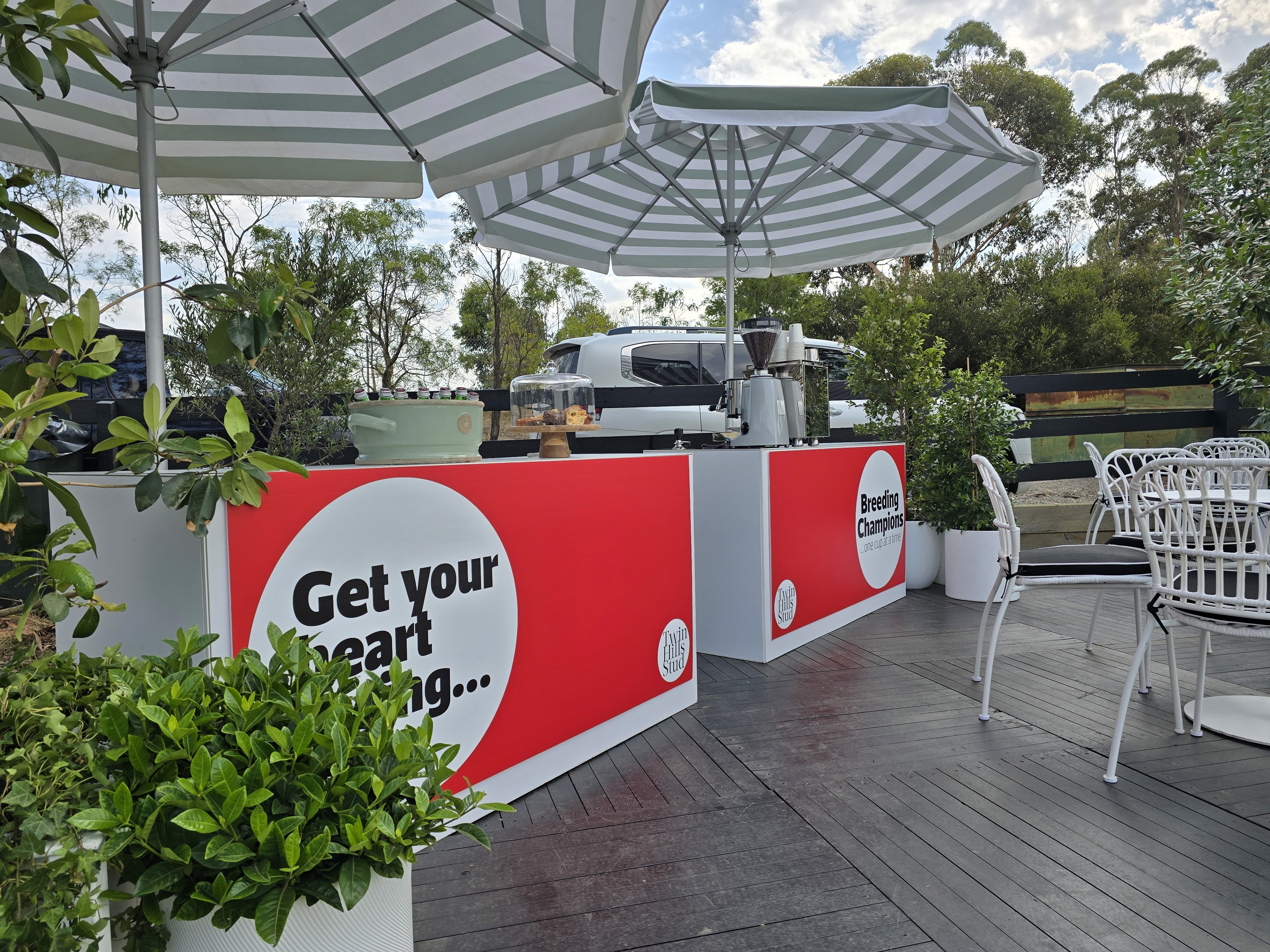
Start with one clear message. Guests should recognise your business from a distance and understand the launch theme without studying a crowded design.
Branding element | Main purpose | Planning tip |
Cart front panel | Make the brand easy to spot | Use one strong logo and high contrast |
Takeaway cups | Keep the brand visible after collection | Check artwork deadlines and print quantities |
Menu board | Connect drinks with the launch | Keep names short and readable |
Staff aprons or signage | Create a consistent presentation | Match approved brand colours |
Place your strongest message where arriving guests will see it, not behind the barista or beneath equipment. Ask for the cart's panel dimensions and a layout preview before approving artwork.
You can also link a cup or menu to a short product message. Keep promotional material separate from the order instructions so guests can choose their drinks quickly.
Should You Offer a Signature Launch Drink?
A signature drink can make a launch feel distinctive, especially for a beauty, technology, property or lifestyle brand. A named latte, iced coffee or mocha can reflect your campaign without needing an elaborate recipe.
The best option is simple to prepare repeatedly. A complicated garnish or several syrups may look impressive but slow down service when guests arrive together.
Build the drink around three things: an appealing flavour, a clear campaign connection and an easy preparation method. Keep standard flat whites, long blacks and non-coffee choices available too.
For design ideas, creating a branded signature drink shows how flavour, naming and presentation can support an activation. Offer suitable milk alternatives and identify ingredients clearly, especially when guests have allergies.

How Many Coffees Can a Launch Cart Serve?
Capacity depends on the barista, machine, menu and order pattern. As a working guide, one experienced event barista may serve around 40–60 coffees per hour with a mixed café-style menu. A streamlined setup can sometimes reach 60–80 per hour, but that is not a safe promise for every launch.
The table below illustrates why guest numbers alone are not enough:
Launch scenario | Expected coffee orders | Service window | Average orders per hour |
80 attendees | 50 | 2 hours | 25 |
150 attendees | 100 | 2 hours | 50 |
250 attendees | 175 | 2 hours | 88 |
These are examples, not predicted drink totals. Your own audience may order fewer coffees, or return for seconds. Check the likely drink mix and confirm realistic barista service capacity before choosing staffing and equipment.
Why Is Peak Arrival Demand More Important Than Attendance?
An average hourly figure hides short rushes. Imagine 90 guests arriving within 30 minutes, with 45 ordering a drink. That creates demand equal to 90 coffees per hour, even if the launch lasts two hours.
At a steady 40–60 coffees per hour, one barista could produce roughly 20–30 drinks in those 30 minutes. Orders may build faster than they are completed, creating a queue just as your presentation begins.
This is called arrival compression: many orders falling into a short window. It is often the key difference between a calm activation and a crowded foyer.
You can reduce that pressure by opening service earlier, extending the ordering window, adding a second staffed workstation or offering a focused menu during the busiest period. Two baristas sharing one machine do not automatically double output; machine and bench capacity still matter.
Where Should the Coffee Cart Sit to Keep Guests Moving?
Choose a visible location with enough room for ordering, waiting and collection. A cart next to the main entrance may attract attention, but a queue should never block registration, doorways, accessible paths or emergency exits.
Treat the space as three small zones:
Order: Guests can view the menu and speak to the barista.
Wait: Guests stand away from the main walking route.
Collect: Finished drinks are handed over without crossing the incoming queue.
This separation is the queue footprint: the total area taken up by the cart and the people around it. Your floor plan should allow for both, not just the cart's dimensions.
For busy launches, managing event coffee queues is especially important when demonstrations, photography and visitor registration happen nearby.
What Melbourne Venue Requirements Should You Check?
Melbourne launch venues vary widely. A CBD office lobby, a Richmond showroom and an outdoor activation may each have different loading access, electrical supply and space limits.
Confirm the following before you book:
Power: Available outlet, circuit capacity, cable safety and any testing requirements.
Water and waste: Whether the cart is self-contained and how wastewater is managed.
Access: Lift size, door clearance, loading dock times and setup deadlines.
Weather: Shelter and a safe electrical plan for outdoor Melbourne events.
Approvals: Venue catering rules, food safety documents and insurance requests.
Some sites have strict catering arrangements. Melbourne Convention and Exhibition Centre (MCEC), for instance, lists an exclusive coffee cart provider and requires approval for external food and beverage activity. Do not assume an outside cart is permitted there; check the event's rules before committing to a supplier.
For public trading, Victorian operators may also need FoodTrader registration or notification and a Statement of Trade, depending on the activity. Ask your supplier to confirm the requirements relevant to your launch.
How Do You Plan Coffee Service Without Complicating the Launch?
1. Map Your Guest Arrival Pattern
Share your invitation count, check-in time, presentation schedule and likely busiest 15- or 30-minute period. Include any media, VIP or staff service that could overlap with general guests.
2. Match the Cart to Your Campaign
Choose branding, menu options and a cart size that fit the space. When choosing an activation coffee cart, balance visual impact with safe access for staff, guests and equipment.
3. Agree on the Operating Plan
Set arrival and setup times, electricity and water needs, stock quantities, allergen information, collection points and pack-down arrangements. Decide who approves artwork and who the barista team should contact on the day.
4. Give the Baristas the Run Sheet
Highlight speeches, demonstrations, photo opportunities and expected arrival surges. A short briefing helps the service team adjust its pace while your launch team concentrates on the product.
What Affects Coffee Cart Hire Costs in Melbourne?
The price is usually shaped by how long you need service, how many drinks you expect and what the cart must include. A simple indoor launch is different from a multi-day activation with several service points.
Ask whether your quote covers professional baristas, delivery, setup, pack-down, cups, milk alternatives and waste handling. Custom printed cups, full-cart wraps, extra staff, after-hours access or long travel distances may change the total.
Compare suppliers using the same event details, rather than only a headline hire price. A flexible coffee service for events should be planned around your schedule and audience, not just the number of hours booked.
What Else Do Launch Organisers Commonly Ask?
Can one cart serve 200 guests?
Possibly, if only some guests order and service runs over several hours. If most arrive at once, an extra barista or second service point may be more suitable.
How early should branding be confirmed? Allow time for design approval, artwork checks, printing and delivery. Ask about the supplier's actual deadlines before announcing a branded menu or cup.
Can guests who do not drink coffee participate?
Yes. Tea, chai, hot chocolate and appropriate non-dairy options help more guests enjoy the experience. Keep choice useful but manageable during peaks.
How can you judge whether the cart worked?
Track cups served, peak queue length, guest feedback and product conversations. If you use QR codes, make the next step clear and measure voluntary scans separately from coffee orders.
Ready to Make Your Product Launch Coffee Setup Effortless?
An effective product launch coffee cart combines distinctive branding with realistic capacity and smooth guest movement. When these details align, your coffee service supports the atmosphere without distracting from the announcement.
Jeepsy Mobile Baristas offers professional baristas, mobile coffee setups and custom branding options for Melbourne events. For a polished service that suits your venue, guest numbers and launch goals, connect with Jeepsy support team to discuss a practical event plan.