October, 2026
General
Blog
Event Barista vs Café Barista: Key Skills in Melbourne
Why Event Baristas Need Different Skills
A skilled café barista and a skilled event barista share the same foundation. Both need to understand espresso extraction, milk texture, drink recipes, hygiene, customer service, and how to work efficiently during busy periods.
The difference is the environment in which those skills are used. A café barista normally works in a permanent venue with familiar equipment and established systems, while an event barista may need to create an efficient coffee service inside a temporary Melbourne venue with limited space, changing guest numbers, and strict service times.
That is why the event barista vs café barista comparison goes beyond coffee-making technique. Event work requires additional skills in logistics, adaptability, queue management, communication, presentation, and high-volume service.
Event Barista vs Café Barista: What Is the Main Difference?
The biggest difference is the operating environment and the way demand arrives. Café baristas generally work from a fixed workstation with an established ordering process, while event baristas need to adapt their setup to each venue and event schedule.
Area | Café Barista | Event Barista |
Workplace | Permanent café | Temporary event venue |
Equipment | Familiar fixed setup | Mobile setup that may change |
Demand | Spread through trading hours | Often concentrated into short periods |
Guest flow | Established ordering system | Must suit the venue layout |
Menu | Usually broader | Often streamlined for speed |
Logistics | Mostly pre-established | Power, water and access must be checked |
Customer interaction | Café hospitality | Hospitality plus event representation |
Schedule | Normal trading hours | Driven by event run sheets and breaks |
Neither role is automatically more skilled than the other. They simply require different strengths, and this is why professional event barista experience can make a noticeable difference at corporate functions, weddings, auctions, and other Melbourne events.
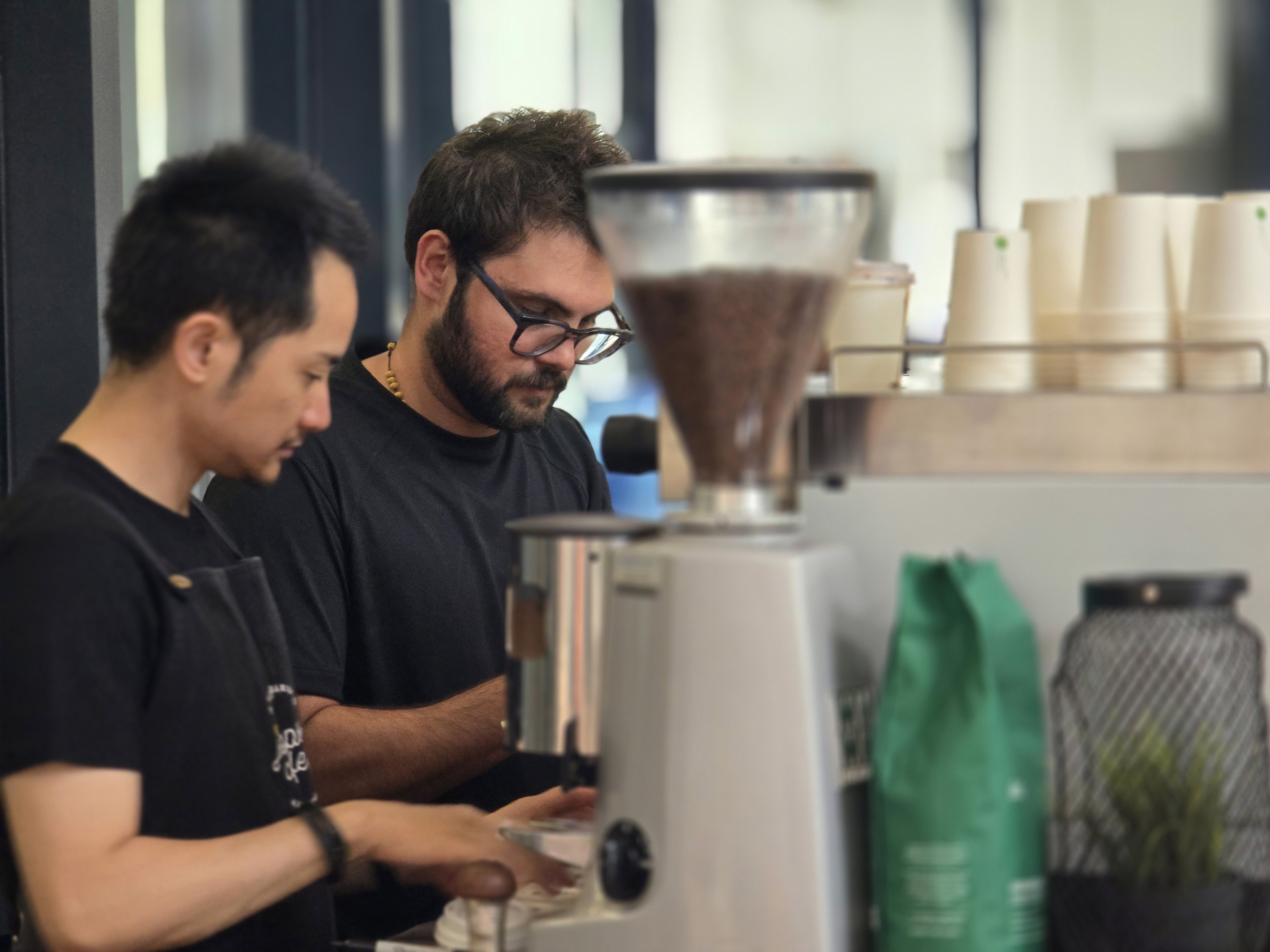
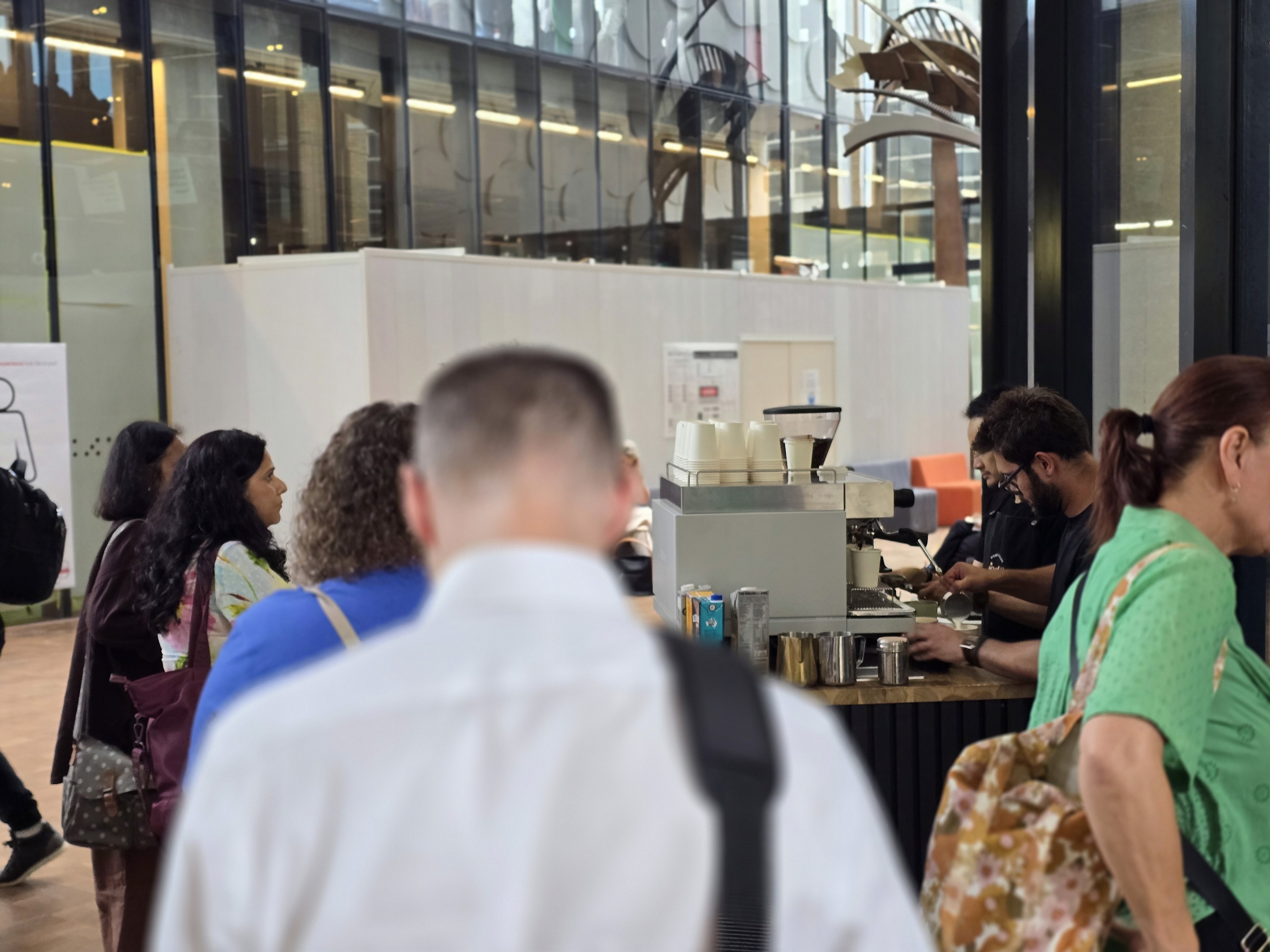
1. Event Baristas Must Handle Compressed Demand
A café can be busy for hours, but customers usually arrive in waves throughout the day. At an event, a large number of guests may arrive at the coffee station within a very short service window.
For example, a Melbourne conference may release 150 attendees for a 20-minute networking break. The barista team must be ready before the session ends, with cups, milk, coffee, lids, alternative milks, and service roles already organised.
High-volume event barista skills include:
Preparing the workstation before peak demand
Keeping milk, cups and supplies within easy reach
Separating espresso, milk and order-taking roles
Producing multiple drinks without losing accuracy
Restocking before essential supplies run low
Maintaining drink quality during sustained service
Good high-volume coffee preparation helps reduce delays and keeps service moving during short event breaks. Speed matters, but an experienced event barista also knows how to maintain consistency while working under pressure.
2. Queue Management Becomes Part of the Barista's Role
In a café, customers usually know where to order, where to wait, and where their drinks will be collected. An event venue may not have any established customer flow, so the coffee team needs to help create one.
This matters at conferences, exhibitions, product launches, and networking events where a poorly positioned queue can block entrances, walkways, registration desks, or sponsor displays. Event baristas therefore need to think about people movement as well as drink preparation.
Practical coffee queue management can include clear ordering points, separate drink collection areas, simple menus, and an organised service sequence. These small operational decisions can improve guest flow without making the coffee experience feel rushed.
3. Event Baristas Need Strong Mobile Setup Awareness
A café barista normally starts work with an espresso machine, grinder, refrigeration, water supply, and waste system already in place. Event baristas often work with mobile equipment, which means the setup itself becomes part of the job.
Before service starts, the team may need to assess several practical details. These include electrical access, water, cart positioning, refrigeration, waste, safe cable placement, venue access, loading areas, and the amount of space available for guests.
A mobile coffee setup may require checking:
Suitable power supply
Water availability
Milk refrigeration
Coffee machine and grinder placement
Waste and coffee-ground disposal
Lift or loading dock access
Bump-in and pack-down timing
Indoor or outdoor conditions
Queue space and guest movement
These factors are especially important across Melbourne, where events can take place in CBD offices, exhibition venues, private homes, gardens, warehouses, showrooms, and outdoor locations. A skilled event barista needs to adapt the coffee station to the venue rather than expecting the venue to behave like a café.
4. Event Baristas Must Adapt Quickly
Café baristas usually become very familiar with one workspace over time. They know where everything is stored, how customers move through the venue, and how the equipment behaves during different service periods.
Event baristas may work in a completely different environment for every booking. A corporate foyer, wedding venue, property auction, outdoor activation, and trade show can all require different service layouts and operating methods.
The team may need to change where cups are stored, how orders are called, where finished drinks are collected, or how baristas divide responsibilities. The right setup can also change depending on whether the event has 40 guests or several hundred, which makes event size planning an important part of mobile coffee service.
5. Communication Goes Beyond Taking Coffee Orders
Café baristas mainly communicate with customers and other café staff. Event baristas often need to communicate with organisers, venue managers, caterers, production teams, security staff, and other event suppliers.
They also need to understand timing. If a conference session finishes at 10:30 am or a wedding ceremony ends at a scheduled time, the coffee station should be prepared before guests arrive rather than reacting after a queue has already formed.
This type of coordination helps coffee service fit naturally into the wider event. It also means the barista team becomes part of the event operation rather than simply a separate beverage supplier.
6. Professional Presentation Matters More at Events
At many events, the coffee station becomes a visible social point where guests gather and interact. The barista may therefore represent not only the coffee service provider but also the quality and professionalism of the host event.
Professional grooming, clear communication, calm behaviour, and a positive service style can all influence the guest experience. These expectations are especially important at corporate events, brand activations, conferences, luxury weddings, and premium property events.
A strong event barista behaviour standard combines technical coffee skills with guest-facing professionalism. The barista needs to be efficient without appearing rushed and friendly without slowing down service.
7. Event Baristas Must Protect Quality While Working Fast
Fast service is important at events, but producing drinks quickly is not enough. Guests in Melbourne are often familiar with good café coffee, so they still expect properly extracted espresso, well-textured milk, correct drink temperatures, and accurate orders.
The challenge is maintaining those standards when several orders arrive at the same time. Experienced event baristas rely on organised workflows, repeatable movements, preparation, and clear team roles rather than cutting corners.
This balance is particularly important for wedding coffee service, where guest experience and presentation are often just as important as service speed. The coffee should feel polished even when the barista team is serving a large number of guests.
8. Event Baristas Need Strong Problem-Solving Skills
A café operates in a permanent environment where recurring problems can often be fixed between trading periods. Events are temporary, so there may be only a few hours available to deliver the entire coffee service.
Unexpected guest numbers, changing schedules, access delays, tight service areas, or sudden demand can all require quick decisions. Event baristas need to remain calm and adjust the workflow without disrupting the wider event.
Many common event coffee problems can be reduced through better preparation and experienced decision-making. Planning the venue, guest numbers, service window, equipment, and workflow before the event gives the team more control when conditions change.
What Should You Look for in an Event Barista?
Espresso-making experience should be only one part of your decision when organising coffee service in Melbourne. A good event barista also needs operational skills that help the coffee station work efficiently within the wider event.
Look for a barista or mobile coffee team that can demonstrate:
Strong espresso and milk skills
Experience with high-volume service
Calm communication under pressure
Efficient queue management
Knowledge of mobile coffee equipment
Professional presentation
Awareness of venue logistics
Experience with dairy and non-dairy options
Reliable setup and pack-down processes
Ability to work around event schedules
These skills are particularly important when arranging coffee service for events, where timing, layout, guest numbers, and presentation can all influence how smoothly service runs.
Why Melbourne Events Benefit From Specialist Event Baristas
Melbourne has a strong coffee culture, so many guests arrive at events with clear expectations about quality. Recreating a café-style experience inside a temporary event space requires more than placing an espresso machine on a mobile cart.
An experienced event barista combines coffee knowledge with logistics, high-volume workflow, communication, guest management, and venue awareness. These extra capabilities help the service remain organised even when the environment, schedule, and demand change from one event to the next.
A café barista may have excellent technical coffee skills, while an experienced event barista adds the ability to use those skills inside a temporary and fast-moving environment. That difference is what makes specialist event experience valuable for Melbourne businesses, organisers, venues, and private hosts.
Ready to Make Your Event Coffee Setup Effortless?
Coffee service can become one of the most engaging parts of your event when every detail is planned properly. Guest numbers, service peaks, power, water, venue access, dietary preferences, equipment placement, and queue flow all contribute to a smoother experience from the first cup through to pack-down.
Jeepsy Mobile Baristas provides professional mobile coffee service for corporate functions, private events, weddings, auctions, and other gatherings across Melbourne. The service can be planned around your venue, expected guest numbers, event timing, and preferred service style.
For a polished and flexible mobile coffee setup that suits your event requirements, you can connect with Jeepsy support team to discuss the right coffee service for your Melbourne event.