2026
Party
Blog
Coffee Cart vs Cocktail Cart for Private Parties | Melbourne Guide
Choosing between a coffee cart and a cocktail cart for a private party is more than a stylistic preference. It directly affects guest experience, compliance requirements, operational logistics, and overall event flow.
Both options elevate private celebrations in different ways. The right choice depends on time of day, audience demographics, venue constraints, and the atmosphere you want to create.
This guide provides a structured comparison to help you make a confident decision.
At a Glance Comparison
Choose a coffee cart if:
Your event runs during the morning, afternoon, or early evening
You want a fully inclusive option suitable for all ages
You prefer minimal compliance and regulatory complexity
Your venue has limited alcohol permissions
You want steady energy without intoxication management concerns
Choose a cocktail cart if:
Your event is primarily evening-based
Alcohol is central to the celebration
Your venue supports bar service
You are prepared for RSA and licensing considerations
You want a bar-focused social atmosphere
If your event spans multiple time periods, combining both services may offer the best balance.
What Each Cart Typically Includes
Understanding what is included ensures you are comparing like-for-like services.
Coffee Cart Inclusions
A professional coffee cart service generally includes:
Trained barista(s)
Commercial espresso machine and grinder
Core espresso-based menu
Alternative milk options
Cups and serviceware
Setup and pack-down
Public liability insurance
Most mobile coffee setups require access to a standard 10–15 amp power outlet. Many providers operate self-contained systems, reducing dependency on venue plumbing.
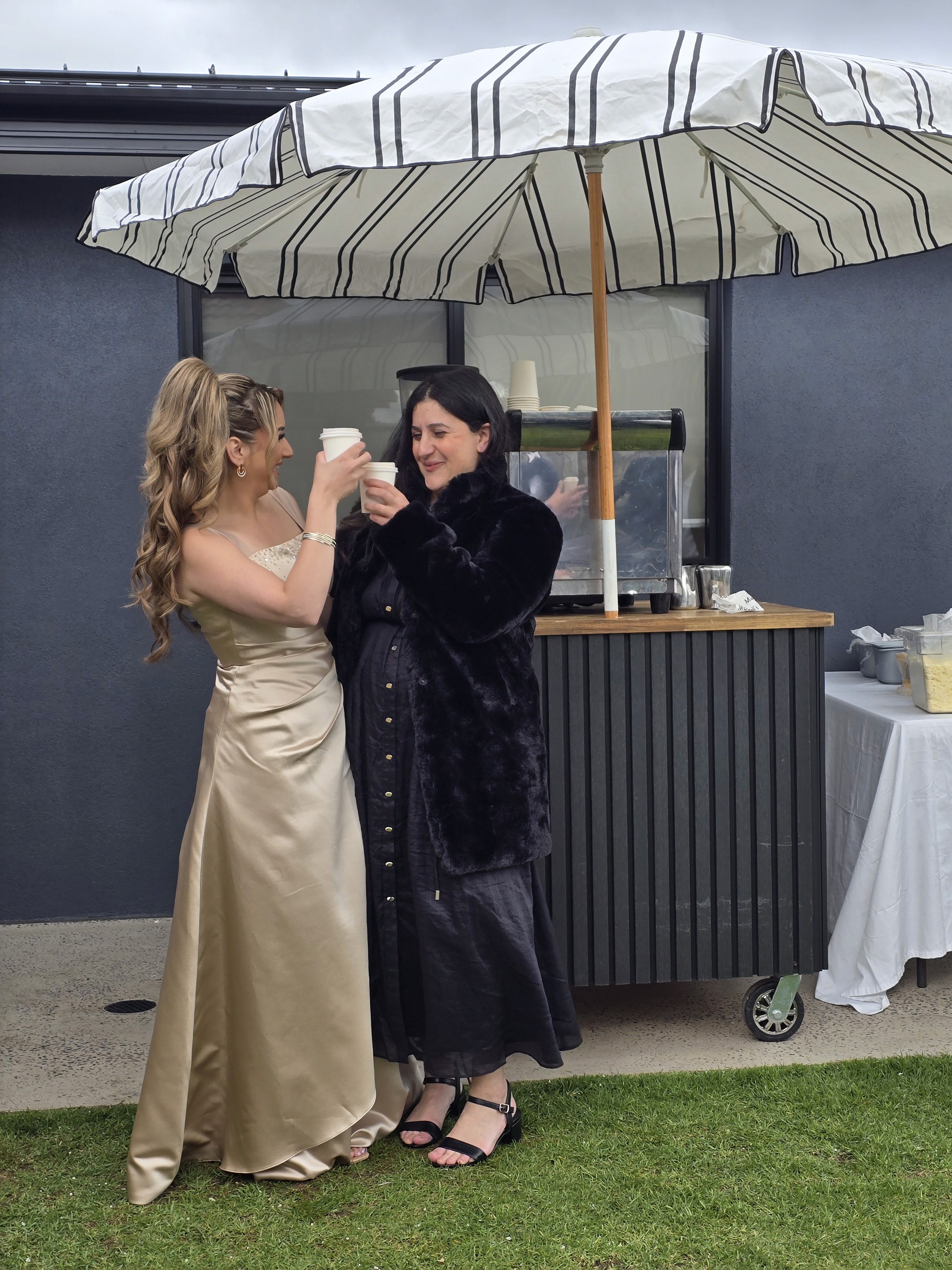
For structured celebrations such as birthdays, engagements, and house parties, mobile coffee catering integrates smoothly into broader private event beverage service arrangements where reliability and guest flow are essential.
Coffee service focuses on speed, consistency, and accessibility.
Cocktail Cart Inclusions
A cocktail cart typically provides:
RSA-certified bartender(s)
Portable bar structure
Bar tools and equipment
Glassware (or rental coordination)
Ice and garnishes
Mixers and syrups
Alcohol supply model (supplier-provided or BYO depending on agreement)
Alcohol service introduces additional responsibilities, including safe consumption monitoring and potential licensing requirements depending on how alcohol is supplied.
Storage, refrigeration, waste management, and glassware logistics must also be factored into planning.
Guest Experience Comparison
The difference between coffee and cocktail service is most visible in how guests interact with the space.
Energy & Atmosphere
Coffee carts create a consistent, steady rhythm. Guests order, briefly interact with the barista, and return to conversation energised. The experience enhances the event without becoming the central focus.
Cocktail carts often become a gathering point. Guests remain at the bar longer, conversations extend, and the atmosphere becomes more celebratory. This can be positive, but it may also slow circulation in smaller venues.
Inclusivity & Demographics
Coffee service accommodates:
Children
Non-drinkers
Pregnant guests
Guests observing cultural or religious restrictions
Attendees avoiding alcohol for health reasons
Cocktail service may require additional options such as mocktails to remain inclusive.
If your guest list includes mixed age groups or professional colleagues, inclusivity may weigh heavily in your decision.
Service Flow & Throughput
Service speed depends on staffing and menu complexity.
Factor | Coffee Cart | Cocktail Cart |
Best Time of Day | Morning to evening | Late afternoon to night |
Average Service Time | Fast with streamlined menu | Slower with complex cocktails |
Guest Inclusivity | Universal | Adult-focused |
Compliance Complexity | Low | Moderate to high |
Operational Dependencies | Power access | Alcohol, ice, glassware logistics |
Event Impact | Supports atmosphere | Becomes social focal point |
For example, two baristas can comfortably manage peak demand at an 80-person event over a 2–3 hour window if menu options remain focused. Cocktail preparation time increases when drinks involve multiple ingredients or garnish detail.
Practical Planning Factors
Timing & Event Schedule Placement
Coffee carts perform well during:
Mid-afternoon birthday celebrations
Post-ceremony wedding receptions
Corporate daytime functions
Late-evening “second wind” service
Cocktail carts typically align with:
Guest arrival windows
Toast segments
Evening milestone celebrations
Some events benefit from a staggered approach:
4–6pm: Cocktail welcome service
7–9pm: Coffee activation during dessert
This structure maintains energy while avoiding over-reliance on alcohol.
Space & Setup Requirements
Coffee carts usually require:
2–3 metres of flat space
One accessible power outlet
Minimal storage area
Cocktail carts require:
Dedicated bar space
Ice storage
Glassware management
Alcohol storage compliance
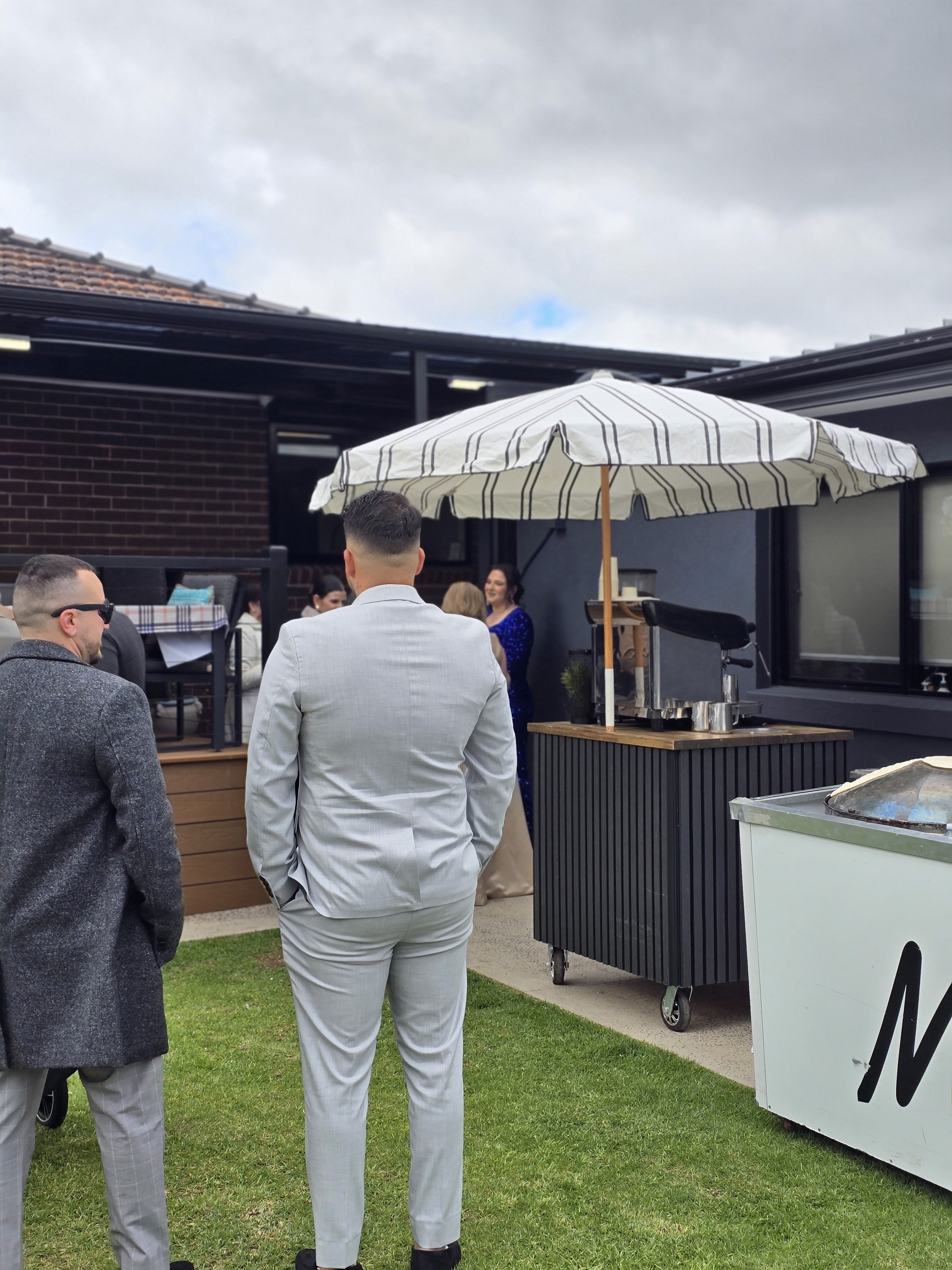
In private homes, particularly backyards, coffee setups often introduce fewer spatial constraints.
Service Speed & Guest Count Logic
At 50–80 guests:
One barista may suffice if demand is staggered
Two baristas significantly reduce wait time during peak demand
Cocktail service may require:
One bartender per 40–60 guests depending on complexity
Additional staff if glassware washing is required onsite
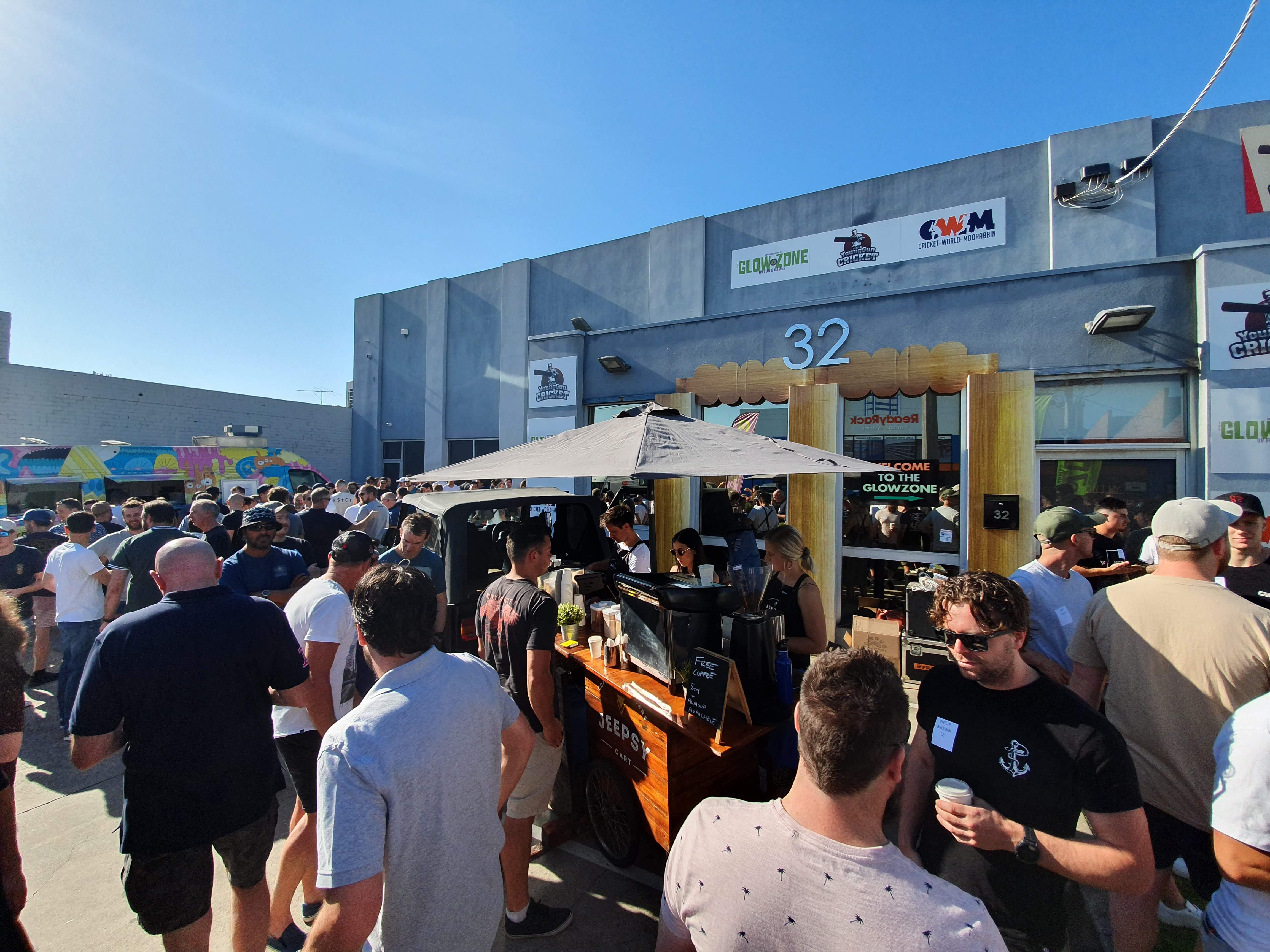
Operational insight is critical. Structured activations in professional settings, such as this corporate brand execution, demonstrate how beverage service must align with time constraints and guest flow.
Weather Considerations
Outdoor beverage service must account for:
Shade or cover
Wind exposure
Rain contingency
Heat management
Coffee equipment operates reliably under covered conditions. Cocktail setups must also manage ice melt and glassware safety.
Noise & Venue Restrictions
Some venues restrict alcohol service or impose strict compliance requirements.Coffee carts generally face fewer restrictions, making them suitable for community spaces, residential settings, and structured corporate environments.
Experience across diverse venues, reflected in practical execution examples such as the custom-branded cart deployment, illustrates how beverage service can enhance events without introducing operational friction.
Cost Drivers Explained
Pricing depends on staffing, duration, and complexity.
Coffee Cart Pricing Factors
Number of baristas
Service duration
Guest count
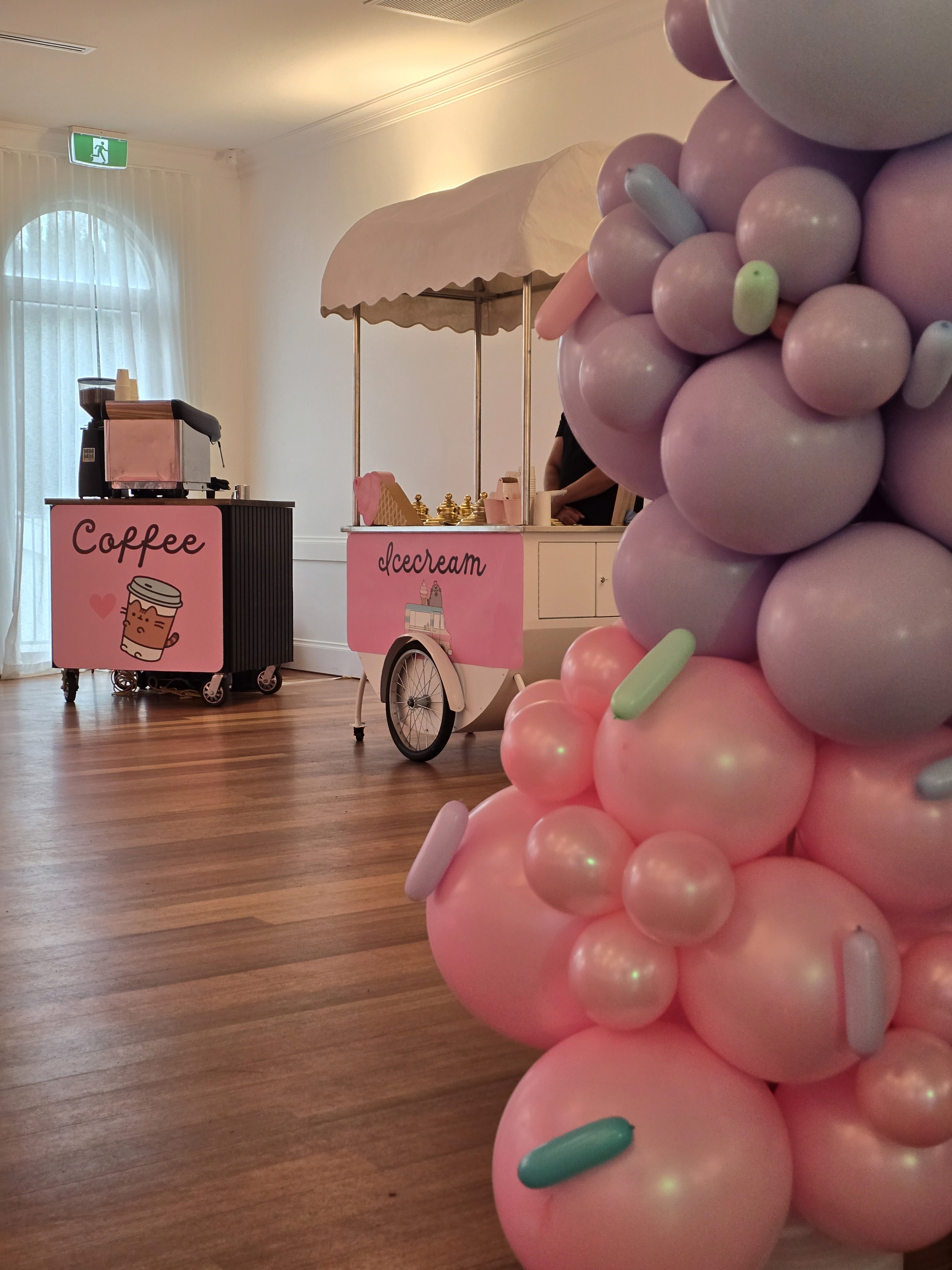
Custom branding requirements
Equipment transport complexity
Branded cups, signage, and cart customisation increase scope.
Cocktail Cart Pricing Factors
Number of bartenders
Alcohol supply model
Glassware rental
Ice volume
Licensing compliance
More complex cocktail menus increase preparation time and staffing needs.
Hidden Costs to Consider
Glassware breakage
Additional ice deliveries
Overtime staffing
Waste disposal
Extended venue hire due to late pack-down
Understanding these factors early prevents budget misalignment.
Compliance & Legal Considerations (Victoria Focus)
Alcohol service in Victoria may require a Temporary Limited Liquor Licence depending on the event structure and whether alcohol is sold or supplied commercially.Responsible Service of Alcohol (RSA) certification is mandatory for those serving alcohol.
Mobile food and beverage operators may also be subject to local council registration requirements under Victorian food safety frameworks.Coffee carts operate within food safety regulations but do not require liquor licensing, which simplifies compliance for residential events.
Hosts should verify specific requirements through official Victorian Government resources before confirming alcohol-based catering.
Best Option by Party Type
Birthday Party
Afternoon birthdays often benefit from coffee service, particularly where families and mixed age groups are present.
Evening milestone birthdays may align better with cocktail service, provided compliance and venue capacity support it.
Engagement Party
Engagement parties frequently begin in the evening. Cocktails can serve as a welcome element, while coffee later in the event supports pacing and guest comfort.
Backyard Wedding
Backyard weddings present spatial and compliance constraints. Coffee carts integrate smoothly into residential settings without the licensing complexity associated with alcohol service.
Corporate environments prioritise professionalism and risk management. Coffee service supports networking and conversation without the behavioural considerations associated with alcohol.
Planning Checklist Before Booking
Before confirming your booking, clarify:
Estimated guest count
Service duration (e.g., 2–3 hours)
Indoor or outdoor location details
Access to a 10–15 amp power outlet
Clear setup space and equipment access
Weather cover if outdoors
Expected peak service time
Menu preferences and alternative milk needs
Branding or customisation requirements
Venue insurance or approval conditions
Final Consideration
For private parties in Melbourne, beverage service should feel effortless while still elevating the guest experience. A professionally managed coffee cart keeps the atmosphere warm, inclusive, and energised from start to finish without adding unnecessary complexity to your event planning.
If you’re looking for a reliable and experienced provider, Jeepsy Mobile Baristas are a trusted mobile barista service in Melbourne, delivering professionally equipped coffee carts tailored specifically for private events.